



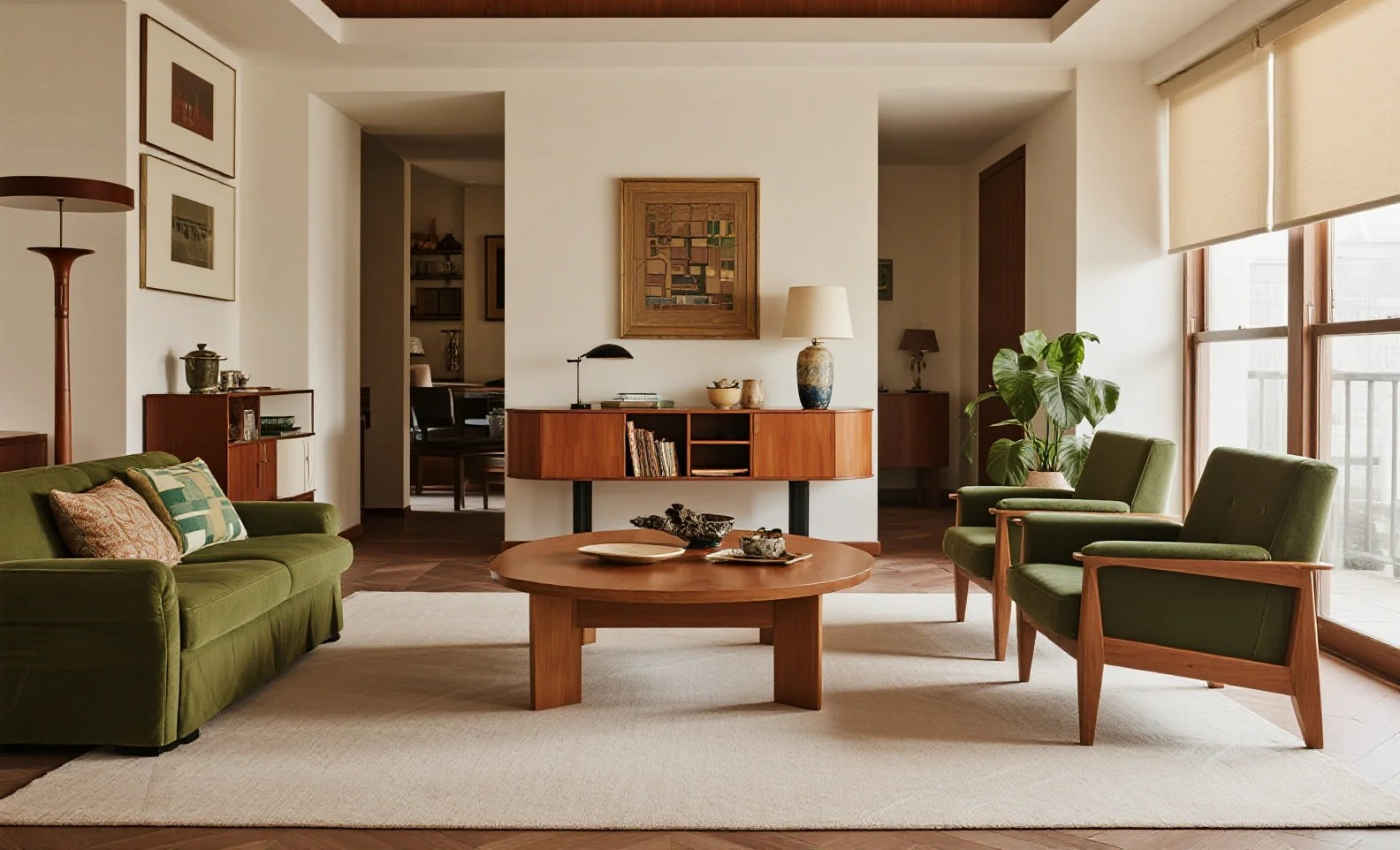
Mid Century Modern interior decorating remains one of the most sought-after styles for homeowners and designers who want a clean, functional, and elegant look. Originating in the mid-20th century, this design movement blends simplicity with organic shapes, practical forms, and a warm palette.
Whether you’re redoing a single room or furnishing an entire home, understanding the core principles of Mid Century Modern can help you create a space that feels both nostalgic and contemporary.
Table of Contents
What Is Mid Century Modern?
Mid Century Modern (MCM) is a design aesthetic that emerged roughly between the 1940s and 1960s. It emphasizes minimal ornamentation, clean lines, gentle organic curves, and a seamless relationship between indoor and outdoor spaces. Materials like teak, walnut, molded plywood, metal, and glass are common, often combined with bold color accents and graphic patterns. The movement values form following function—every piece should be practical and beautiful.
Key Elements of Mid Century Modern Interior Decorating
- Clean Lines and Simple Forms: Furniture features straight or gently curved lines without excessive decoration. Think streamlined sofas, tapered legs, and low-profile silhouettes.
- Natural Materials: Wood (especially teak and walnut), leather, and stone create warmth and authenticity.
- Functional Layouts: Spaces are designed for usability. Open floor plans, minimal clutter, and purposeful furniture placement are essential.
- Organic Shapes and Patterns: Upholstery, rugs, and artwork often include abstract or geometric motifs that echo natural forms.
- Bold Accent Colors: While the overall palette tends to be muted, pops of mustard yellow, avocado green, teal, or burnt orange add personality.
- Mix of Textures: Combine smooth surfaces (lacquer, glass) with tactile materials (wool, boucle, leather) to add depth.
Color Palettes That Work
A signature of Mid Century Modern is its balanced use of color. Start with neutral bases—white, warm gray, or soft beige—then layer in richer hues. Popular combinations include:
- Walnut wood tones with teal and mustard accents
- Soft gray walls with a burnt orange sofa and brass fixtures
- Olive green chairs paired with natural wood and black metal details
Aim for contrast without overwhelming the space. Use accent colors sparingly through throw pillows, art, or a single statement chair.
Furniture Choices: Invest in Statement Pieces
Choosing the right furniture is central to achieving an authentic MCM look. Focus on a few well-crafted pieces rather than filling a room with trendy items. Signature pieces include:
- Low, tufted sofas with tapered legs
- Egg or womb-style chairs for cozy, sculptural seating
- Credenzas and sideboards in rich wood finishes
- Minimal coffee tables with metal or wooden frames
When shopping, look for iconic designers (or faithful reproductions) such as Charles and Ray Eames, Arne Jacobsen, and Hans Wegner—pieces that keep evolving in style and resale value.
Lighting: Functional Art
Lighting in Mid Century Modern design doubles as functional art. Fixtures often feature sculptural forms, brass or matte black finishes, and globe or cone shades. Consider:
- Arc floor lamps for dramatic overhead light without rewiring
- Sputnik chandeliers for a retro focal point
- Table lamps with geometric bases and simple shades
Proper lighting enhances mood and highlights architectural features and furniture lines.
Textiles and Accessories
Textiles provide the finishing touch. Choose rugs, cushions, and curtains with geometric patterns or subtle organic prints. Natural fibers like wool, cotton, and linen fit well with MCM’s tactile aesthetic. Accessories should be curated: a sunburst mirror, a ceramic vase, or a vintage clock works better than cluttered shelves.
Creating Flow Between Indoor and Outdoor
Mid Century Modern design often blurs the boundary between inside and out. Use large windows, sliding glass doors, and unobstructed sightlines to connect living spaces with gardens or patios. Incorporate plants—ficus, snake plants, and succulents—to reinforce the natural, relaxed vibe.
Modern Tips: Mixing Old and New
To keep the look fresh, mix Mid Century Modern classics with contemporary pieces. A modern sectional works alongside a vintage credenza; a minimalist art print can complement an Eames lounge chair. The goal is cohesion: maintain the MCM principles of function, proportion, and simplicity while allowing personal touches.
Common Mistakes to Avoid
- Overcrowding with mid-century pieces: Less is more. Let statement items breathe.
- Relying only on wood tones: Include metal, glass, and textiles for balance.
- Ignoring scale: Make sure furniture proportions suit your room size.
- Clashing colors: Use accent hues deliberately and sparingly.
How to Start Your MCM Makeover
- Define focal points (sofa, credenza, or a large rug).
- Choose a neutral foundation for walls and large pieces.
- Add one or two mid-century statement furnishings.
- Layer textures and patterns with textiles and rugs.
- Finish with curated lighting, art, and plants.
Following these steps helps you create a cohesive and inviting Mid Century Modern interior without overwhelming your space or budget.
Short Recommendation
Muyi Display — decorative design company specializing in large-scale festive and artistic installations. We provide premium Christmas trees, oversized floral arrangements, floral art designs, window displays, decorative lighting (lanterns & string lights), and spatial decor for commercial or event spaces. Elevate your ambiance with our creative visual solutions.